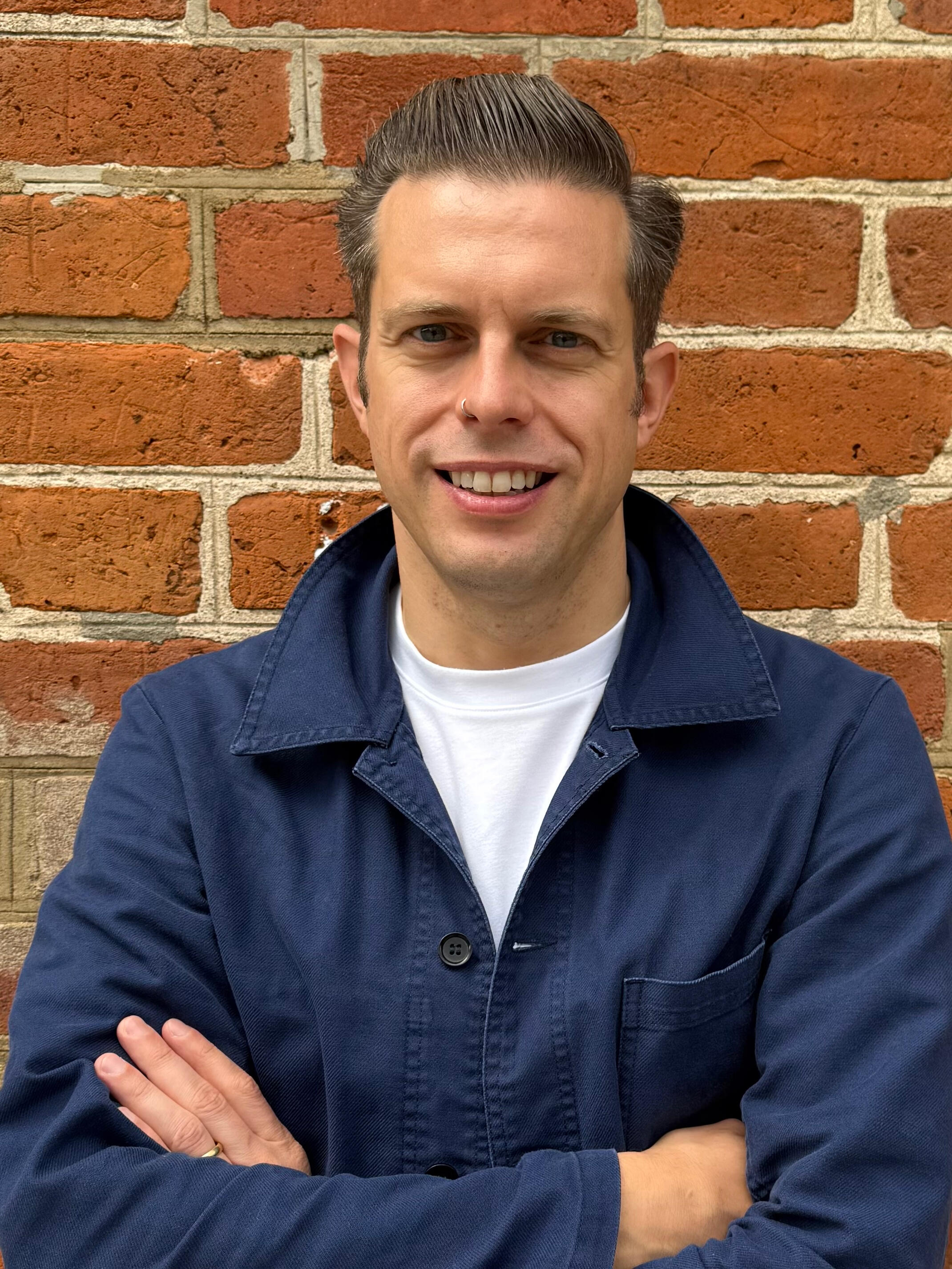
Paul Leworthy
I am a researcher working across German Studies, comparative literature, film studies, memory studies, semiotics and cultural history.I am currently a Leverhulme Early Career Fellow in the School of Modern Languages at Newcastle University.
This page offers an overview of my research, beginning with the questions that drive it, then turning to the publications that have grown from it and finally the talks that have brought it to different audiences.Later sections introduce other important areas of my work, including translating, teaching, connecting people with ideas and one another, leadership and making things.
The Core of my research
1
How is the present shaped by the past?How is the past remembered in the present?
2
How and what do things and texts mean?How and by whom are things invested with meaning?
3
How and why are texts, images, objects, and spaces used to give shape to the past in the present?
1/10
Thinking
At the heart of my thinking is an interest in how meaning is made, communicated and contested, especially through the signs people use to make the world meaningful: words and images, stories and gestures, objects and places, buildings and monuments, materials and even everyday practices.I am particularly interested in cultural memory and my research often explores how and which ideas about the past are embedded into signs and stories circulating in the present. Individuals and groups often have to navigate and negotiate conflicting stories about the past, all of which shape how we think about – 'remember' – the past and determine which aspects of the past are paid attention, overlooked, brought back into view, disputed or celebrated in the present.Some accounts of what happened in the past are stories that are widely accepted across large groups of people. But sometimes different stories - or even just accounts that focus on different aspects of past events - conflict and compete for dominance. In such cases, accounts about the past can become sources of bitter dispute. This is not least because - explicitly or implicitly - accounts of what happened in the past always also indicate specific kinds of attitudes towards what happened. The way we view the past and the way we are encouraged to view it is usually very strongly influenced by present conditions.What I am most interested in is how things, objects, materials, spaces and specific places are involved in the creation and circulation of ideas about the past. When these kinds of things are involved we often barely notice the ways in which they are steering how we think and feel about the past.Although my work usually begins in German Studies, it rarely remains there or within any single disciplinary boundary. As well as frequently ranging across national and linguistic contexts, my research often combines semiotics, film, literature, material culture, politics and various kinds of history.
2/10
Writing
Writing provides me with a space to pursue ideas, test connections and work towards sustained arguments. It is where my research develops and one of the main ways I share it.My current Leverhulme-funded postdoc project, 'Reading Reconstruction: Literary Responses to Rebuilding in Postwar West Germany', examines how the reconstruction of German cities after the Second World War was represented in literature, film and wider culture. It asks how contemporaries understood the immense physical transformation taking place around them, and how rebuilding became entangled with the memory of National Socialism.My first book, The Shape of Memory: Containers and Surfaces in Post-war European Literature, is currently in press and will be published by Peter Lang later this year (2026). This monograph examines how embodied experience of our interactions with objects and spaces has shaped the language and theory of memory. It proposes that different spatial forms have come to express different understandings of memory and different relationships to the past, and performs a series of contextualised critical close readings of novels by Günter Grass, Georges Perec, Patrick Modiano and Martin Walser to demonstrate the theory. This book grew out of my PhD.In other publications, I have explored the 'materials of memory', the 'geometry of commemoration' and the relationship between 'memory and environment’. Like my PhD project and my current postdoc, all of these projects and publications are interested in the entanglement of objects, space and memory.Another major area of my research explores German memory culture from the immediate post-war period into the present with a focus on Germans' evolving relationship with the Nazi past. This area of my work is not limited to my postdoc. One of my ongoing side projects explores the recent boom in interest in Fritz Bauer (1903-1968), a lawyer persecuted by the Nazis who became a state prosecutor in post-war West Germany and initiated the Frankfurt Auschwitz trials in the 1960s.Closely linked to this is my interest in Günter Grass, who was an important focus in my PhD and first monograph, and on whom I have published various pieces. With Julian Preece, I co-edited A Companion to the Works of Günter Grass for Camden House, which will appear next year (2027) - the centenary of Grass’s birth.Film is becoming an increasingly central part of my research and is also a feature of my postdoc project. I have published articles on Almanya – Willkommen in Deutschland and Das deutsche Volk, examining how contemporary German cinema intervenes in ongoing debates about migration, national identity and public memory.
3/10
Speaking
Giving talks about my work offers opportunities to bring my research to different audiences and to test ideas, obtain feedback and start conversations. Audience comments and questions often open up new avenues for thinking and lead to new ideas to explore.I have delivered invited lectures, conference papers and research seminars at universities and across the UK and Europe. These have ranged across all aspects of my work and discussed literature, film, material culture, monuments, museums and various aspects of the politics and history of memory.In 2023, I wrote and performed a one-hour show entitled Why Monuments Should Lie at the Edinburgh Fringe Festival as part of the Cabaret of Dangerous Ideas collaboration between the University of Edinburgh and The Stand comedy club. Presenting one aspect of my research in non-academic language and infused with humour and provocation, the show offered an unorthodox solution to the problem of controversial monuments – namely, laying them on their sides.The Connecting Memories Podcast, which I launched in 2020, offers another way of thinking aloud and discussing research in my field. Each episode features a guest specialist on memory, providing opportunities to not only ask questions about some aspect of that scholar's latest research but also to discuss their thinking about memory more generally and how it has developed over their career.
4/10
Translating
Translation demands constrained problem-solving, critical thinking and close reading sensitive to both language and context. It is one of the forms of work I find most satisfying, whether teaching it in the classroom or undertaking it professionally.Each sentence requires careful consideration and decision-making with regard to the word choices, tone, associations, history, audiences and cultural assumptions that may or may not be shared across the different linguistic contexts. The task is not simply to reproduce the literal sense of a source text, but to find an English form capable of doing comparable work for a new readership.While I have worked professionally as a German-to-English translator on projects ranging from literature, philosophy and academic texts to public information panels, government policy and commercial copy, including online platforms, I also have a growing portfolio of translations concerned specifically with cultural memory, public history and memory policy.I have completed several specialist translation commissions for the City of Hamburg, including producing English translations for the information panels erected beside the city's massive and controversial Bismarck monument. I also recently retranslated texts by Friedrich Nietzsche and Walter Benjamin for an academic reader on historiography.My translations of untranslated poems by Günter Grass will be published in Camden House's forthcoming Companion to his work, including a first published English translation of 'Die Vorzüge der Windhühner' ('The Merits of Windchickens'), the famous title-poem of Grass's first ever published work.Over the years I have done various translation projects for several independent Berlin-based publishers, including books, products and various online platforms.
5/10
Teaching
I am a passionate educator and teaching is integral part of my work. Teaching, as I love and understand it, is much more than introducing students to existing knowledge or even transferring skills. For me, teaching is ultimately a question of helping students become more thoughtful, more engaged and more empowered agents within the world as they experience it. I also take seriously the tasks of developing students’ skills, building their confidence and inspiring them to be curious and to think critically and independently.My teaching is informed by my research but not confined to it. Fostering deep engagement with language and culture is, for me, less a question of developing students’ understanding of academic theories or their appreciation of great works of art than an opportunity to help them recognise the possibilities, risks and dangers inherent in the creation and communication of words, ideas and meanings.I have taught German language, literature and culture at three Russell Group universities: the University of Edinburgh, the University of Manchester and Newcastle University. My language teaching has covered grammar, writing, speaking and translation, while my cultural teaching has ranged across literature, film, history, politics, memory culture and discourse analysis.This experience extends across all levels of higher education, both undergraduate and postgraduate. I have supervised numerous independent research projects, again at both undergraduate and postgraduate levels, on topics including German literature and culture, translation studies and memory studies. Alongside classroom teaching and supervision, I have experience of course design, cohort leadership and pastoral mentoring.
6/10
Connecting
Bringing people within academia together, bringing people outside of academia into contact with academic ideas and insights, and opening spaces for exchange and enrichment are all central pillars of my commitment to academic collegiality and to public humanities.In 2017, I co-founded Connecting Memories, an interdisciplinary research network based in Edinburgh intended to bring together scholars with an interest in memory but working across different disciplines and institutions. In the forms of well-attended keynote lecture series over several years, multiple symposiums and, since 2020, The Connecting Memories Podcast, the network has fostered many encounters, exchanges and collaborations that might not have otherwise taken place.At the University of Edinburgh, I ran a Work-in-Progress research seminar series for postgraduate students when I was doing my PhD and the departmental research seminar series during my time as a Teaching and Research Fellow in German there. I also organised numerous themed semester-long film screening series for colleagues and students at Edinburgh as well as at Manchester.I recently organised a UK tour of the German documentary Das deutsche Volk, which took the film to public and academic audiences in Newcastle, Leeds, Glasgow, Edinburgh and London. After each screening, I hosted a Q&A with the director.
7/10
Leading
Beyond my duties within the institutions that I have worked in, I have taken on leadership positions across several academic organisations and collaborative initiatives, coordinating people and projects, building structures to support collective work and taking responsibility for sustaining and developing it over time.I co-founded Memory Studies Review, an international peer-reviewed journal, already one of the leading venues for cutting-edge interdisciplinary research within the burgeoning interdisciplinary field of Memory Studies. I continue to serve as one of the Editors-in-Chief.I also am Publicity Officer for the Association for German Studies in Great Britain and Ireland. As well as contributing as a member of the Executive Committee, my responsibilities focus on managing the Association’s online presence, in the course of which I have overseen the design, development and implementation of a new website and membership database as well as a transition from Twitter/X to Bluesky. Separately, I co-maintain the UK's principal German Studies email mailing list.
8/10
Creating
Making things provides me with an outlet for a different, more practical, more applied way of thinking - often in direct response to some observation, frustration or need.Before I started my PhD I developed a business concept to encourage people who don't read much to read more. What resulted was The Book Pharmacy, a bilingual website selling attractively-presented themed book bundles and various kinds of personalised book recommendation service. Creating The Book Pharmacy allowed me to combine and develop my existing skills across product and service design, branding, communication and socially-oriented commercial thinking. My broader social commitment to literacy and access to reading underlies my voluntary work with several literacy and reading charities over the years.More recently, I have begun developing digital tools. Tramlines is a forthcoming reading-support app for macOS and iOS designed to make on-screen reading clearer, calmer and more focused through adjustable guides, focus bars, colour overlays and flexible dimming. I have also developed Ranked, a tool for creating, arranging and sharing ranked lists, that is already available as a webapp and will be released as an iOS app soon. These projects continue a long-standing tendency to approach familiar problems from unusual angles and to turn ideas into services, experiences and practical tools.
9/10
Background
Who I am, how I think, and the path that my work has developed along have been shaped by movement between disciplines, languages and countries, and by an interest in questions and problems that don't sit comfortably within a single established field.I hold a PhD in Comparative Literature from the University of Edinburgh. Prior to that I did an MA in European Literatures at the Humboldt-Universität zu Berlin and a BA in French and German at the University of Nottingham. I went to a state school.Before moving to Edinburgh, I lived, studied and worked in Berlin for several years.
10/10
Contact
While this page mainly discusses projects underway or already completed, its wider purpose is to enable new conversations and collaborations.I am glad to receive questions about my work as well as enquiries about potential research collaborations, speaking opportunities, specialist translation projects and general queries.Click one of the icons below to get in touch or email me at
[email protected].